



Bryman's Social Research Methods

×
- Prijs:
- € 62,73
- Auteur:
- Tom Clark
- Uitgever:
- Oxford University Press
- Type boek:
- Paperback
- Editie:
- 7
- Gewicht:
- 1560 gram
- EAN:
- 9780198895985
- ISBN:
- 9780198895985
- Conditie:
- Nieuw
- Beschrijving:
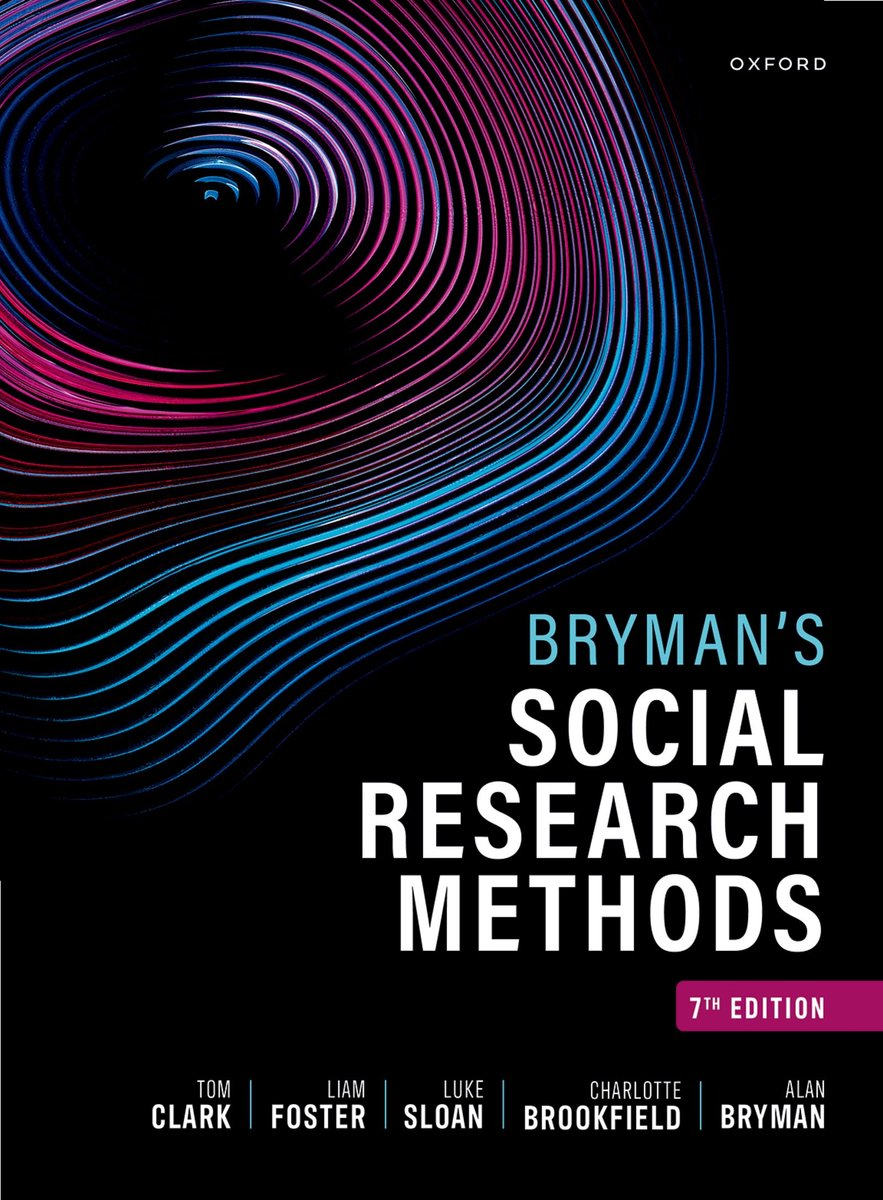
Bryman's Social Research Methods (7th Edition)
Executive Overview
Bryman's Social Research Methods (7th Edition, ISBN: 9780198895985), authored by Tom Clark, Liam Foster, Luke Sloan, and Charlotte Brookfield, stands as the definitive academic resource for social science methodology. Having guided more than 250,000 students globally, this comprehensive textbook offers an unrivaled analysis of quantitative, qualitative, and mixed methods research design.
Published by Oxford University Press, the seventh edition has been meticulously updated to reflect the contemporary digital landscape, incorporating modern pedagogical frameworks, algorithmic data analysis techniques, and innovative qualitative paradigms.
Core Architectural & Pedagogical Features
The textbook bridges the gap between abstract epistemological theories and empirical application through structured, student-focused pedagogical features:
• Theoretical Grounding: Complex methodological concepts are demystified through standard text explanations, reinforced by 'Key Concept' modules that isolate and define critical jargon and foundational procedures.
• Critical Thinking Frameworks: Specialized 'Thinking Deeply' sections prompt researchers to engage with contemporary epistemological debates, ethical dilemmas, and socio-political research constraints.
• Empirical Application ('Research in Focus'): Real-world published studies are embedded throughout the text to demonstrate theoretical execution. These global case studies cross diverse academic disciplines and touch upon modern societal phenomena—ranging from climate change dynamics and gender stratification to the sociology of true-crime podcasts and digital gambling behaviors.
• Practical Skills Execution: To facilitate independent undergraduate and postgraduate dissertation projects, the text provides actionable 'Tips and Skills' blocks, definitive end-of-chapter 'Checklists', and 'Learn from Experience' case studies featuring narrative insights from recent research graduates (e.g., investigating public sentiments toward the LGBT+ community on social platforms or analyzing the lived experiences of minority single mothers).
What’s New in the Seventh Edition?
Expanded Authorial Expertise & Structure
• Fresh Academic Insights: Tom Clark, Liam Foster, and Luke Sloan return with their trusted expertise, now joined by Charlotte Brookfield to bring fresh, contemporary perspectives to the text.
• Targeted Learning Objectives: Each chapter now initiates with explicit learning objectives, optimizing reading focus, highlighting key takeaways, and streamlining assignment and exam preparation.
Advanced Qualitative Modalities (Chapter 23)
An entirely new chapter dedicated to innovative qualitative research methodologies equips students with non-traditional frameworks for project design. Covered paradigms include:
• Arts-Based Research (ABR): Utilizing creative media to generate and interpret social science data.
• Sensory Ethnography: Engaging with multi-sensory experiences to understand cultural contexts.
• Indigenous Methodologies: Decolonizing traditional research structures by respecting and applying indigenous knowledge systems.
Quantitative Analytics and Software Integration (Chapter 15)
The quantitative core has been significantly upgraded to address empirical requirements in modern data science:
• Statistical Expansion: Comprehensive theoretical and practical breakdowns of Analysis of Variance (ANOVA) and Independent/Paired T-Tests.
• Digital Case Studies: Implementation of a dedicated social media consumption case study to model real-world data processing.
• Software Screencasts: Step-by-step analytical pipelines for industry-standard suites including IBM SPSS Statistics, R, Stata, NVivo, and Microsoft Excel.
AI and Digital Ethics in the Information Age
Addressing the evolution of modern information ecosystems, the seventh edition offers critical guidelines on:
• AI Methodologies: Integrating Artificial Intelligence (AI) into literature reviews, coding pipelines, and data synthesis safely.
• Digital Research Ethics: Navigating the complex landscape of digital data scraping, online privacy compliance, and internet-mediated research (IMR).
Digital Ecosystem & Enhanced Interactive Media
The textbook is supported by an immersive Enhanced eBook ecosystem designed for asynchronous learning environment optimization:
• Self-Assessment Suites: Adaptive multiple-choice testing pools and interactive quantitative diagnostic exercises.
• Multimedia Integration: Integrated video quizzes and student-led video interviews detailing practical research troubleshooting.
• Data Analysis Tutorials: Screen-captured diagnostic workflows showing exact syntax and click-paths for major statistical engines (SPSS, NVivo, R, Stata, Excel).
- Tags
- social-research